 Back to News
April 13, 2026

CEO Martin Rowland explores why great public spaces are not defined by how they look on day one, but by how well they perform for communities over time.
|
- Great public spaces are not just well designed. They are well maintained, properly funded and designed to perform over the long term. - The best outcomes come when councils, designers, contractors and suppliers work together early to balance community needs, budget and asset performance. - Future-ready parks will use data and real-world community behaviour to adapt, evolve and remain relevant for decades. |
The best public spaces are not just designed - they are maintained, funded and lived in.
Public spaces serve a broader role than we often acknowledge.
They are places for children to play, families to gather, older residents to rest, teenagers to connect, workers to pause, and communities to hold events. They are also public assets that need to survive weather, high use, tight budgets, maintenance pressures and changing expectations.
And that’s why I think the best public spaces couple brilliant design with how well they are maintained, funded and lived in. It’s the balancing act between aesthetics, budget and long-term performance.
A park can look outstanding on opening day. The planting is fresh, the paths are clean, the furniture is new and the photos look great. But the real test comes later. Year three. Year five. After a wet season. After a summer of heavy use. After vandalism, cleaning, replacement parts, contractor handover and asset maintenance cycles.
That is when the quality of the early decisions becomes visible.
One of the opportunities I see across the industry is to have holistic, cross-functional conversations earlier.
Councils bring the long-term view. They understand community needs, maintenance realities, budget constraints and asset responsibility.
Landscape architects bring design thinking, spatial planning, place-making and the ability to create a coherent public realm.
Contractors bring practical knowledge of site conditions, sequencing, installation and constructability.
Manufacturers bring product knowledge, material experience, lead-time insight, replacement-part thinking and feedback from many different projects.
When those perspectives are connected earlier, the outcome is usually better.
What does this space need to do over time?
When we focus on this question, rather than simply about product choice and placement, that shift in thinking has a real impact.
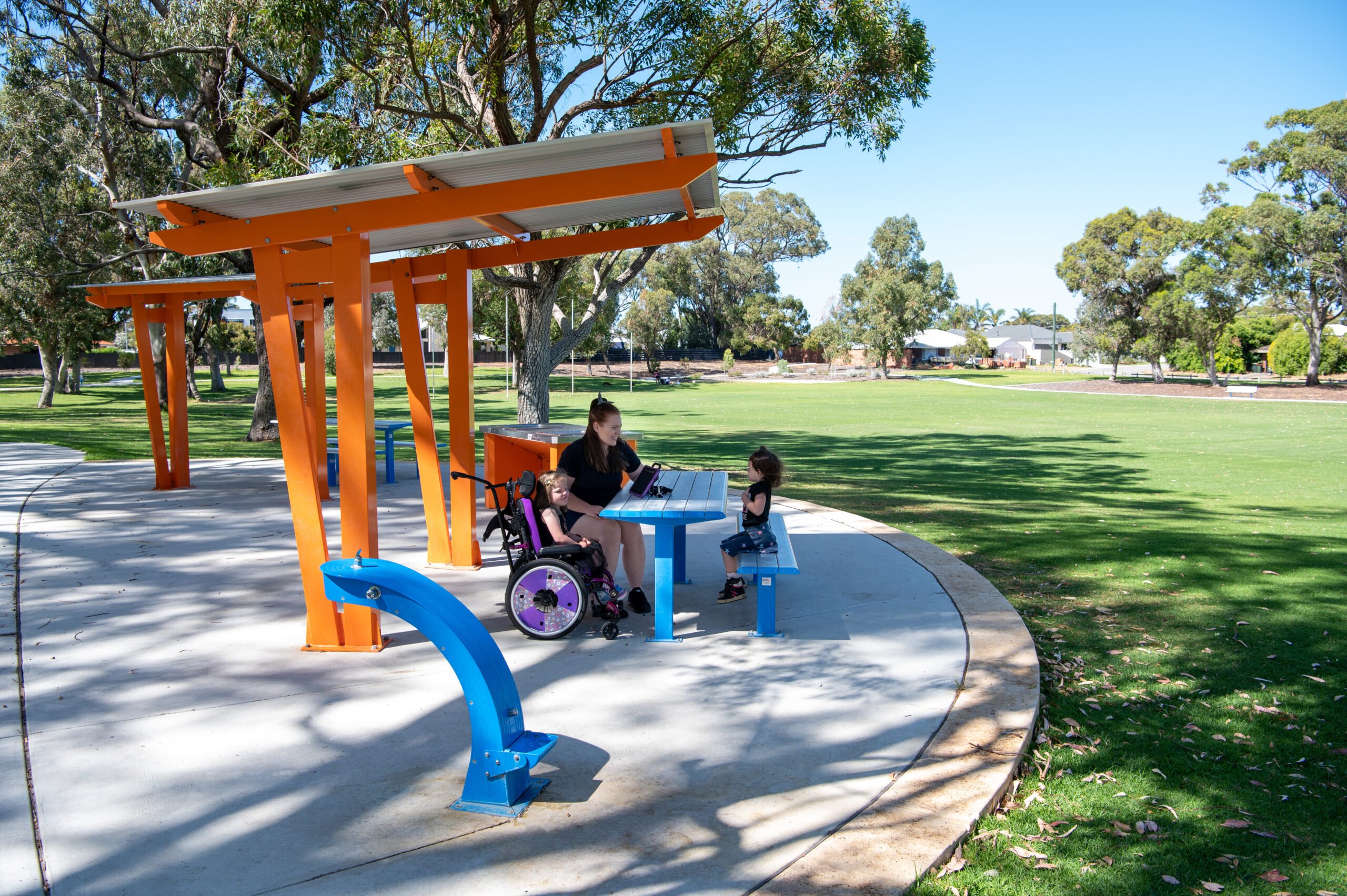
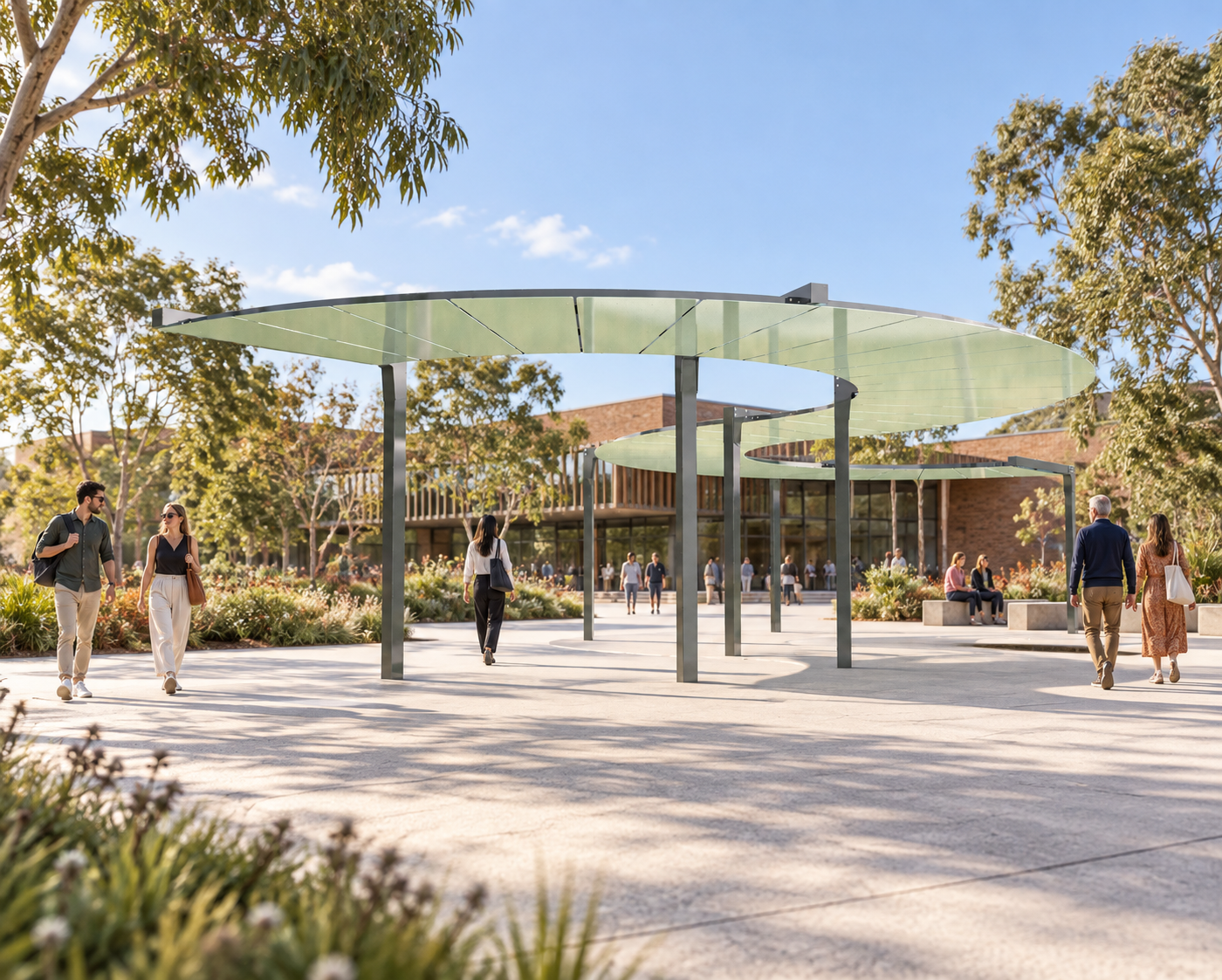
A shelter is not only a structure. It influences dwell time, shade, usability and comfort.
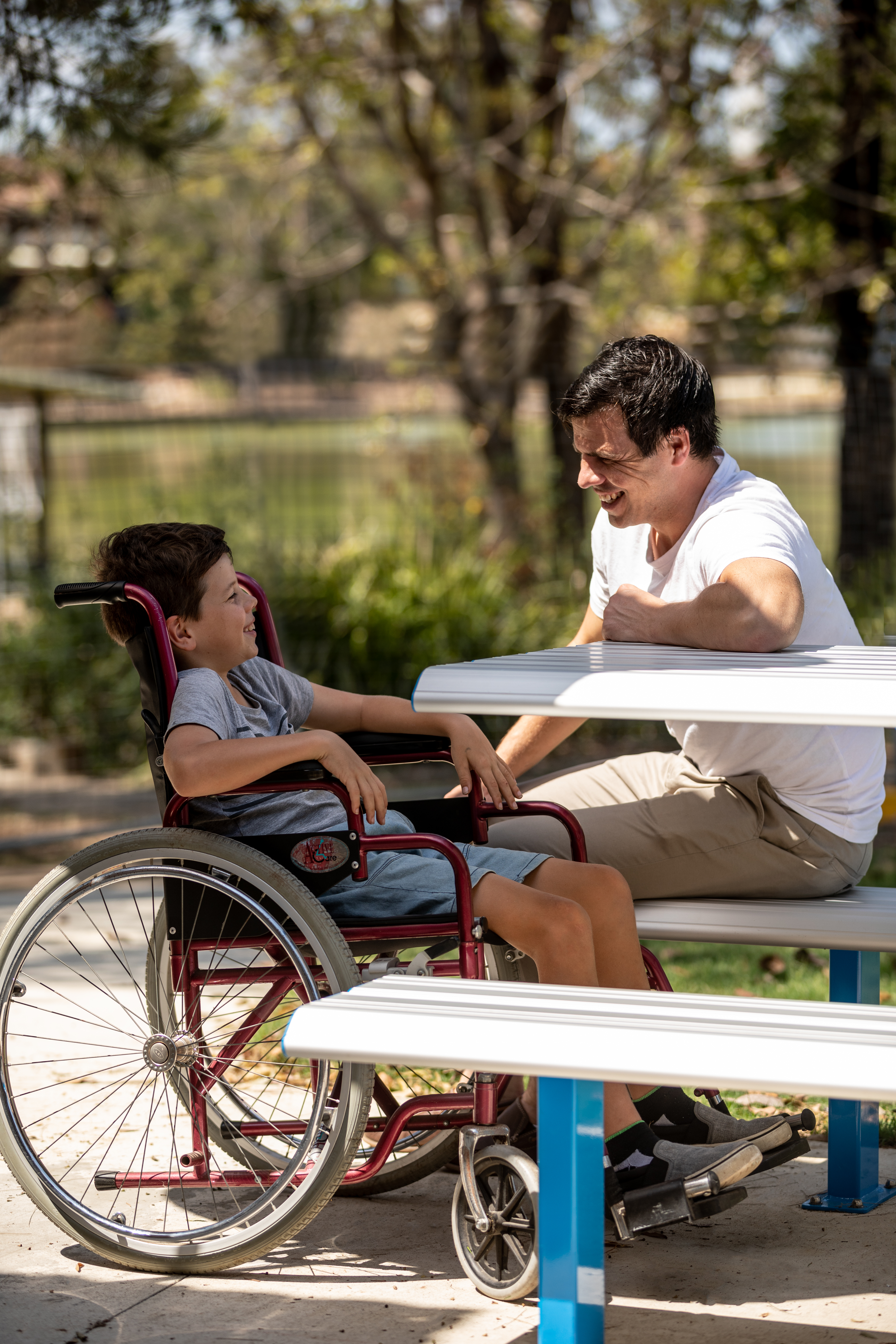
A seat is not only a place to sit. It affects inclusion, rest, accessibility and how different age groups use the space.
A BBQ is not only an appliance. It supports social connection, family use, events and community gathering.
A bin enclosure is not only a waste solution. It affects cleanliness, maintenance efficiency and how the space is perceived.
So, when we look at public infrastructure that way, the conversation becomes more valuable.
How we can measure public-space performance more intelligently?
I am particularly interested in this question as I believe it strengthens decisions. We’re seeing the rise of adaptive, data-informed parks around the world - usage patterns, maintenance records, community feedback, asset life, heat exposure, accessibility, cleaning frequency and replacement part data all have a role to play when it comes to applying those learnings to future design.
As budgets tighten and community expectations rise, I think data becomes even more important. Public spaces need to work harder. They need to serve more people, last longer, be easier to maintain and still feel inviting.
That is not a challenge any one part of the industry can solve alone.
It takes councils, designers, contractors and suppliers working as partners. It takes earlier conversations. It takes clearer documentation. It takes products that are designed for real use, not just catalogue photos. It takes a willingness to ask what will happen after the opening day.
For me, that is where the most useful innovation sits: helping public spaces perform better for the communities that rely on them.
And if there were one key takeaway from what we have learnt through the research we’ve conducted over the last 18-24 months, it’s that the parks and public spaces that will still be thriving in 2050 will be those that were designed to evolve, spaces that learned from real behavior, reflected the cultures and identities of their communities, and adapted to new patterns of use, as easily as we swap out a light fitting or plant a new tree.