|
SUMMARY - Although deeply woven into Australian culture, jacarandas actually originated in South America and arrived here in the 19th century. - From Sydney exam superstitions to Grafton's famous Jacaranda Festival, the tree has become a unique part of Australia's identity and seasonal traditions. - Beyond their iconic blooms, jacarandas provide generous shade, support thriving park landscapes and remain one of Australia's most celebrated street and park trees. |
Every spring, Australia turns purple. From Sydney's harbour suburbs to the streets of Grafton and Brisbane, jacarandas erupt into clouds of lilac-blue blossoms that are woven into the cultural fabric of Australian spring.
But here’s a few things we bet you didn’t know about Australia's favourite "almost-native" tree.
1. They're not from Australia
The Jacaranda mimosifolia species we know and love is actually native to South America. It was introduced to Australia in the 19th century after botanist Alan Cunningham sent specimens from Rio de Janeiro to London's Royal Botanic Gardens at Kew around 1818 and from there, the species spread throughout the British Empire, including Australia.
2. Brisbane claims the first recorded jacaranda planted in Australia
Australia's earliest documented planting was in the Brisbane City Botanic Gardens in 1864 by Walter Hill, the first Curator of the Gardens. It remained in the Gardens until it blew over in 1979. Part of the trunk is now located in the office of the Curator of the Brisbane Botanic Gardens at Mt Coot-tha.
3. But Sydney has Australia’s oldest jacaranda
The Royal Botanic Gardens in Sydney is home to Australia’s oldest living jacaranda, which is believed to have been growing by around 1850, making it an impressive 170 years old.
4. Jacarandas are synonymous with Sydney’s babies
In the 1960s some Sydney hospitals used to send newborn babies home with a jacaranda seedling to plant. In 2023 the North Sydney Council brought in the Trees for Newborns program where residents can get a free jacaranda to celebrate the birth of a new family member, a direct response to declining tree canopy cover on private land within the area.
5. Grafton is Australia’s self-proclaimed Jacaranda Capital
With over 1,700 jacaranda trees, Grafton in NSW turns purple each spring. Its Jacaranda Festival has been running since 1934, making it one of Australia's oldest floral celebrations.
6. They Can Grow Bigger Than a House
 |
|
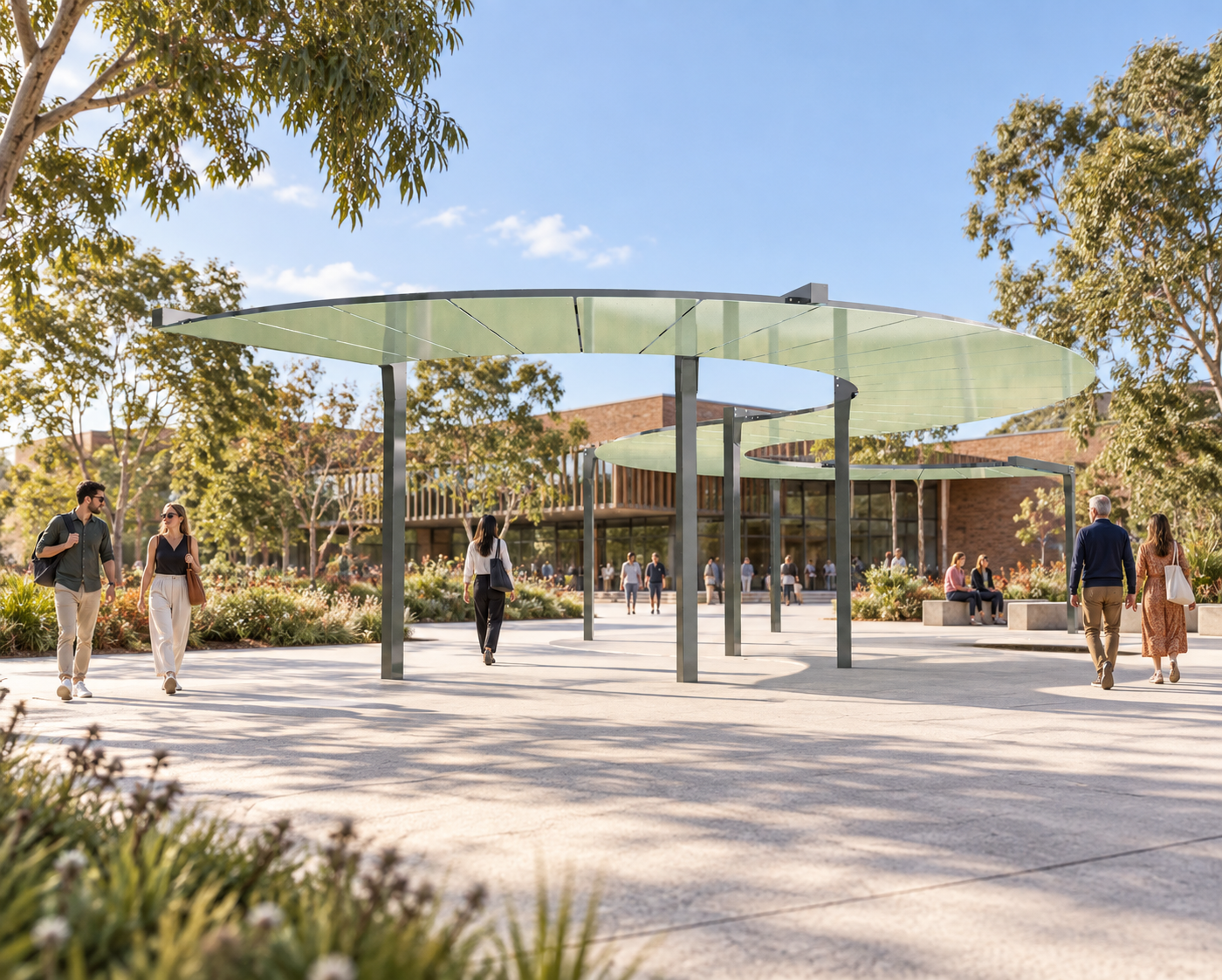
Jacaranda Shade Shelter is inspired by the jacaranda tree, iconic for its distinctive cantilevered branches and unforgettable spring canopy |
Their broad, umbrella-shaped canopies grow between 10 to 15 metres and over 15 metres tall, and some have been known to grow even wider in open conditions. This is even more impressive when you realise modern home blocks average between 10m and 14m wide!
According to the National Register of Big Trees, the largest jacaranda in Australia at 25m wide is located at Grafton High School, with a tree in Kelvin Grove in Brisbane placing second and a tree in Goondiwindi placing third.
7. Sydney University students are superstitious about them
Jacarandas flower just as final exams approach and an adage suggests (wisely) that if you haven’t studied by the time they bloom, you’re doomed to fail while another (somewhat less proven) superstition predicts you’ll fail your exams if a jacaranda bloom falls on your head!
8. They are perfect picnic trees
 |
|
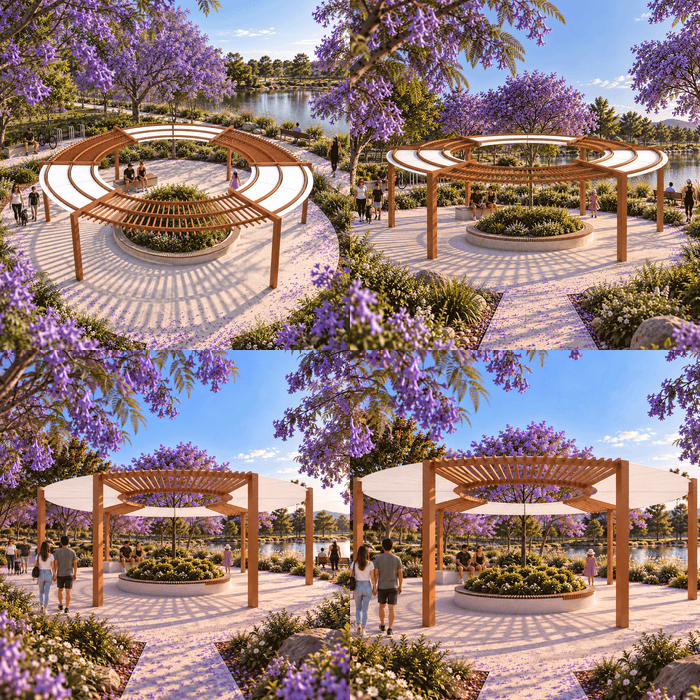
Jacaranda's pergola options add architectural character through filtered shade |
Jacarandas are popular through parks like in Brisbane’s New Farm Park as their fern-like foliage produces a cool, dappled shade with greater light penetration than many dense-canopy shade trees, like figs or plane trees, which means grass and understorey planting are more likely to thrive. In other words, they're almost purpose-built for picnics.
9. They are deciduous
Naked over winter, the flowers often appear before the leaves return, which makes the purple display look even more dramatic.
10. They bloom in waves across Australia
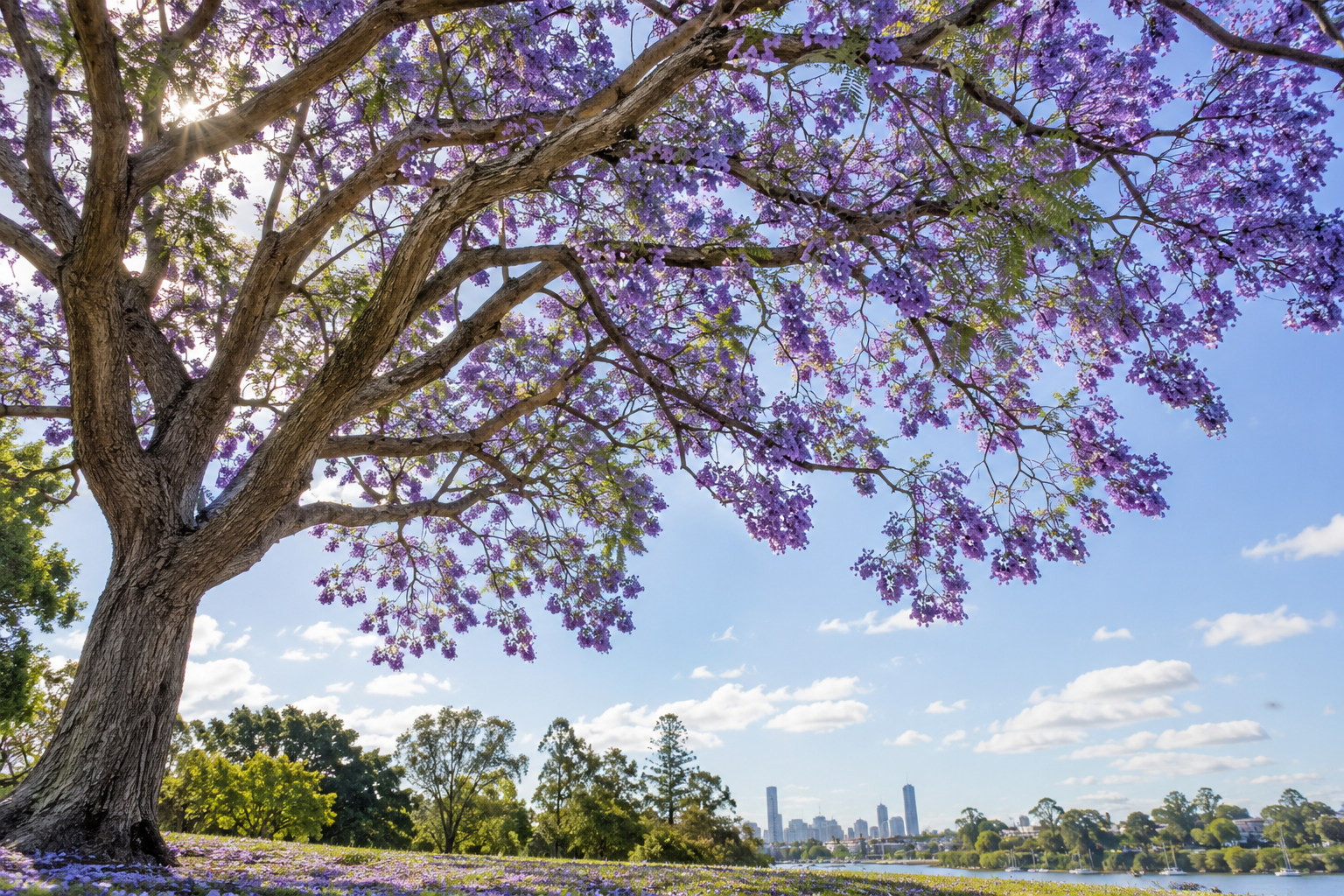
Few sights rival a spring street lined with jacarandas creating spectacular purple archways. Flowering generally begins in warmer northern regions and moves south throughout spring. The most spectacular blooms actually come from trees who have been slightly stressed over winter due to drier weather.
 Back to News