 Back to News
August 14, 2026
Accessibility is no longer just a ‘feature’ of a public space, now it’s a necessity. As a key focal point of every community, public spaces should be constructed from the ground up with the ability needs of each patron at the forefront of design.
What defines ‘accessibility’?
Accessibility is defined as “the freedom or ability of people to achieve their basic needs in order to sustain their quality of life”. In public spaces, this applies to building a space where every member of the community, regardless of ability, is made to feel welcome, safe and accommodating. In the past, accessible structures, such as disabled public toilets, ramps and accessible picnic settings, were add-ons to pre-established spaces – and often located in isolated, segregated spaces. This caused those structures to look out of place, and created a disconcerting and unwelcoming environment that highlighted the accessible feature instead of allowing it to blend into the space.
When designing public spaces, accessibility is at the forefront of design. From the ground up, modern public spaces include plenty of flat planes, ramps, inclusive settings and BBQs as primary structures, all seamlessly integrated to ensure that patrons of every age and ability are made to feel welcome within the community. Creating spaces that have plenty of flat planes, ramps, and inclusive settings and BBQs as primary structures, ensures that patrons of every age and ability are allowed to feel welcome.
The importance of accessible play spaces
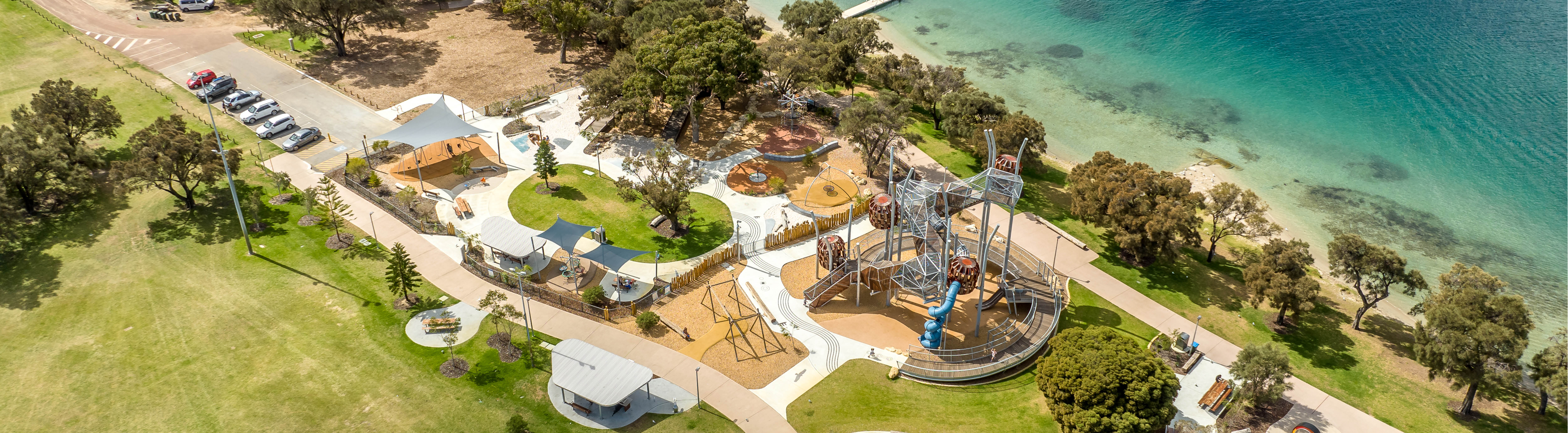
Play spaces are integral to a child’s learning and development, and they offer the opportunity for children of different backgrounds and abilities to come together and play. It is especially important for children with disability to feel welcomed into a play space that is safe and built for their needs, as during these formative years, not engaging in sensory play can increase the risk of anxiety, depression and health conditions.
By building play spaces with accessibility as a key component, rather than as an occasional ‘feature’, children of all abilities can engage with their peers and join in the fun. This also allows for children who do not experience disability to be introduced to those who do and learn how to be accepting and welcoming. Additionally, these kind of inclusive play spaces can also allow for elderly and/or disabled carers of children to join in on the fun and not risk missing out on key childhood moments.
Saving costs by building accessible public spaces from inception
When designing a public space with accessibility in mind, it considerably saves on future costs and disruptive works. Not only is there a government standard in place for new public spaces to comply to accessibility standards, there is also a social standard where communities now automatically expect their local public space to be welcoming for all, regardless of ability. With 1 in 5 Australians living with disability, research has shown that the lack of accessible components in a public space could result in billions of revenue lost every year.
By building accessible public spaces from the ground up, Australia is ensuring that people of all ages and abilities are made to feel welcome, safe and included.