 Back to News
May 18, 2022
|
SUMMARY - Cities such as Bogotá, Chengdu, New York and Oslo are using active transport initiatives to create healthier, safer and more connected communities. - Successful strategies include car-free streets, large-scale greenways, safer pedestrian infrastructure and stronger integration with public transport. - These global examples offer valuable lessons for Australian councils and designers looking to encourage more walking, cycling and public space activation. |
Many countries have successfully boosted active transport through unique initiatives. As pressure grows for Australia to promote active transport, could these global projects provide a blueprint for our future parks? Here are four successful case studies we may see inspire our own communities.
Bogotá, Colombia - Ciclovía Program
 |
|
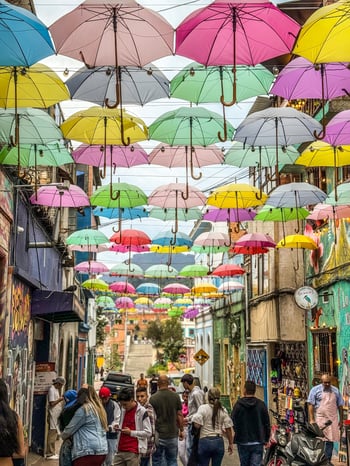
Bogotá, Colombia |
In Bogotá, the city transformed 127km of streets on Sundays and public holidays by closing them to vehicles. This gave people the freedom to walk, bike, run, or skate without worrying about traffic. The goal was simple: make public spaces accessible to everyone, regardless of age, income, or activity. The initiative became so popular that cities like Los Angeles, São Paulo, and Addis Ababa have since adopted the idea, bringing healthy, car-free spaces to more communities around the world.
Chengdu, China - Tianfu Greenway
 |
|
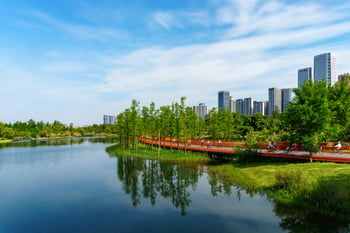
Chengdu, China - Tianfu Greenway |
Chengdu faced challenges such as declining green spaces due to urbanisation and the need to better connect its 21 million residents to key areas of the city. In 2020, the city launched an ambitious project to become a 'Park City' - a vision to transform the entire urban area into one large park, rather than just scattering parks throughout. The result: the world’s longest greenway, spanning over 20,000km, with a network of walking and cycling paths, and where residential and industrial areas were redesigned into green, biodiverse hubs. This greenway allows residents to connect with nature, socialise, and easily access every part of the city, including major landmarks. The project’s success in improving biodiversity and stimulating the economy has established Chengdu as a global leader in sustainable urban development and a model for cities around the world.
New York City, USA - Vision Zero
 |
|
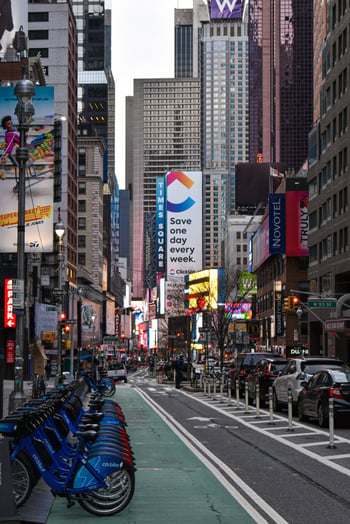
New York City, USA - Vision Zero |
When New York City's original road design failed to account for the needs of cyclists and pedestrians, the city needed a new solution to keep its residents safe. The $900 million Vision Zero initiative took a comprehensive approach to redesigning public spaces. Bollards were installed to create safer barriers between cyclists and traffic, while pedestrian walkways were widened, and curb extensions (bump-outs) were added to shorten crossing distances at intersections. Car-free zones were created in new spaces, complete with greenery, seating, and park furniture. The result? Historic lows in traffic fatalities, a cultural shift toward active transport, and a safer, more accessible city for everyone.
Oslo, Norway - Car-Free Livability Program
Oslo pioneered a change management approach by adopting a bottom-up, continuous improvement model to redesign its city centre, with the goal of reducing car use and increasing green spaces and alternative transportation. Over several years, the project involved the community through face-to-face engagement and workshops, making small changes and incorporating feedback as it progressed. Early changes included converting parking spaces into green areas to discourage cars while expanding public transport and creating pathways to promote active transport. Public transport was redesigned to allow bikes onboard, making it easier to combine different modes of transport in one trip. The new green spaces also brought upgrades to infrastructure, including furniture, lighting, art, and water features. These efforts led to Oslo being named European Green Capital in 2019 and established the city as a model for urban car-free areas.
From Global Innovation to Local Design
These four case studies highlight the innovative approaches to active transport in diverse global environments, showcasing the potential for creating more sustainable and accessible urban areas. By integrating multi-use pathways, prioritising safety, and ensuring seamless connections with public transportation, we can foster more vibrant, inclusive park spaces.
As urban development continues to rise, the emphasis on active transport will be essential in shaping parks that not only enhance quality of life but also contribute to healthier, more sustainable communities. Drawing inspiration from these global success stories, Australian designers have the opportunity to lead the way in crafting inclusive, active environments for the future.